
What the company does?
Tara Chand Infralogistic is in equipment rental business. The business is divided into 3 segments
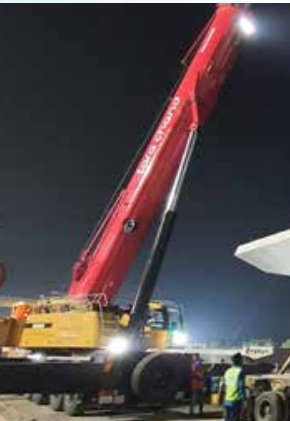
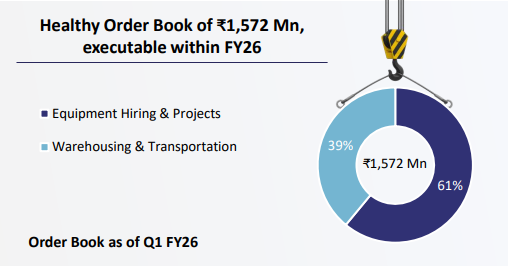
- Segment A (Equipment Rental Business) – This segment contributed 56% of the revenue in FY25. Company has a total of 375 Fleets including cranes up to 800MT capacity.
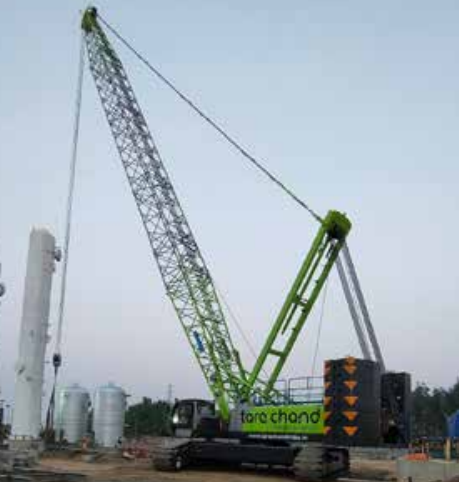
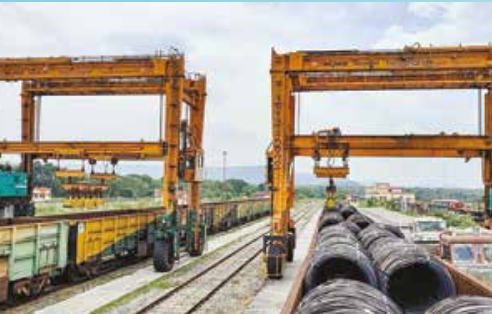
- Segment B (Warehousing & Transportation) – This segment contributed 39% of the revenue in FY25. Company provides steel handling & warehousing facilities to Steel Authority of India (SAIL) & Rashtriye Ispat Nigam (RINL).
- Segment C (Steel Processing & Distribution) – This contributed just 5% to the revenue in FY25. Company provides TMT rebar processing and steel fabrication services in this segment.
What is Company’s Business Model?
- The Construction Equipment Rental segment, also referred to as Equipment Handling (EH), is a significant growth driver. TCISL specializes in renting a diverse range of heavy material handling equipment. This includes hydraulic truck cranes, rough terrain cranes, crawler cranes, tower cranes, conventional truck cranes, and boom trucks, with capacities extending up to 900 MT. The fleet also comprises hydraulic piling rigs (ranging from 155 kN to 320 kN), specialized steel processing machinery (such as shear lines, twin masters, robo masters, compressors, and decoiling machines, totaling 32 units), and concrete equipment like batching plants and mobile boom placers. A notable acquisition in July 2023 was India’s first and tallest (68 meters) Aerial Working Platform (Boomlift / Manlift), further enhancing its specialized capabilities.
- The Turnkey Infra-Project Execution vertical, often referred to as EPC (Engineering, Procurement, and Construction), involves undertaking specialized civil and mechanical work contracts for infrastructure projects. This segment allows TCISL to offer more comprehensive solutions and participate in larger, more complex projects.
- The Warehousing & Multi-modal Transportation vertical encompasses cargo handling and logistics services, predominantly for steel and other heavy materials. The company is a premier player in steel logistics, handling over 10 million tons of steel annually. This segment provides a stable revenue base and leverages the company’s long-standing relationships with major steel producers.
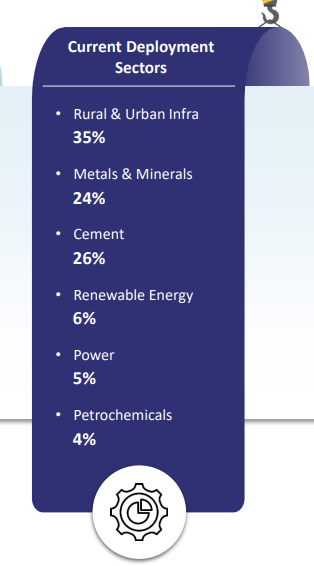
Which industries does TCISL serve?
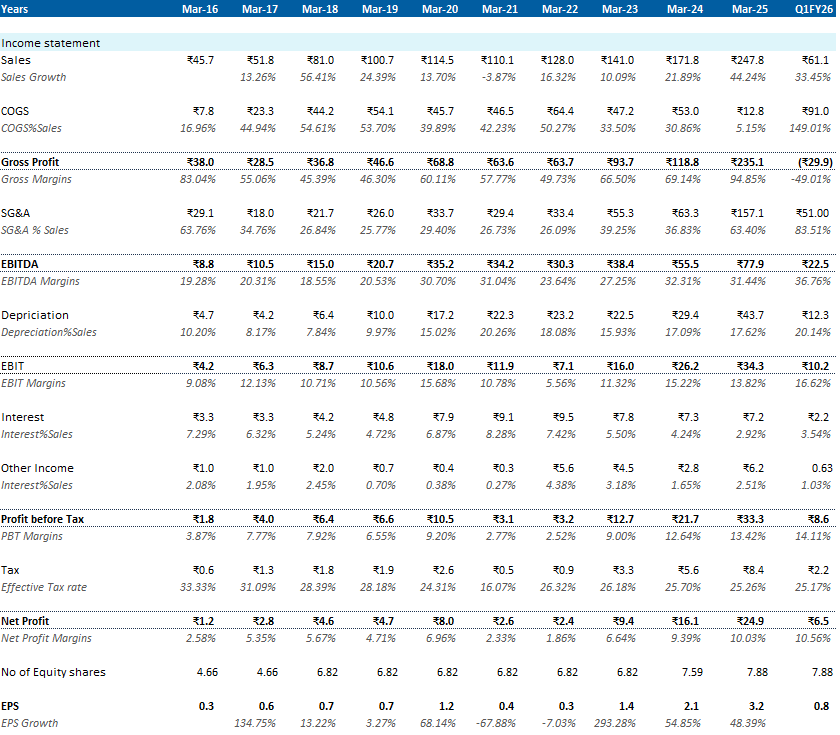
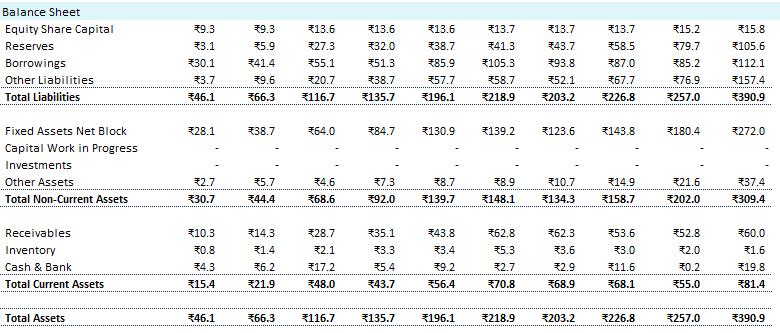
How have been company’s financials?

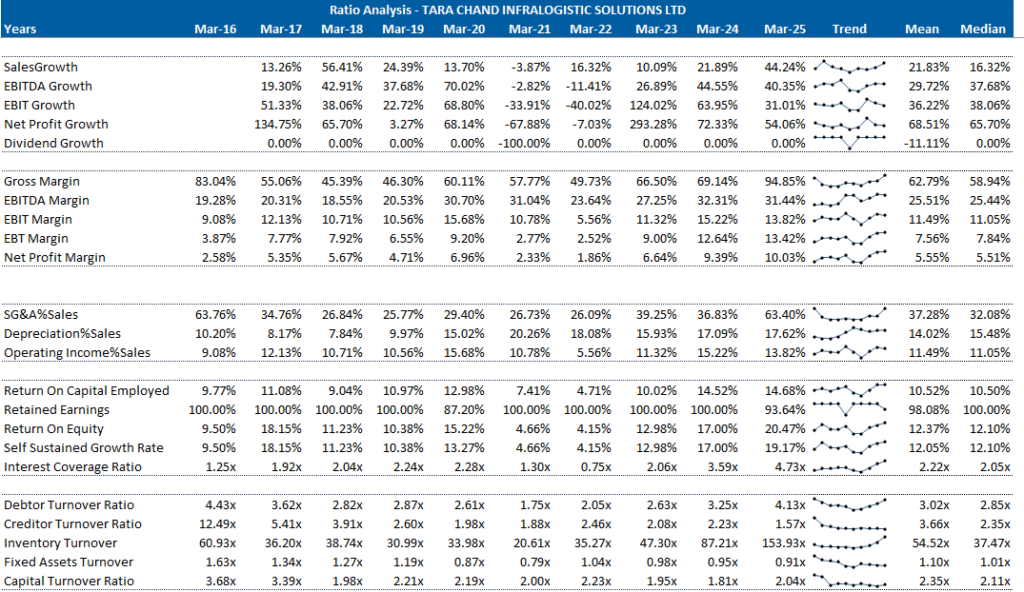
What are the key financial ratios?

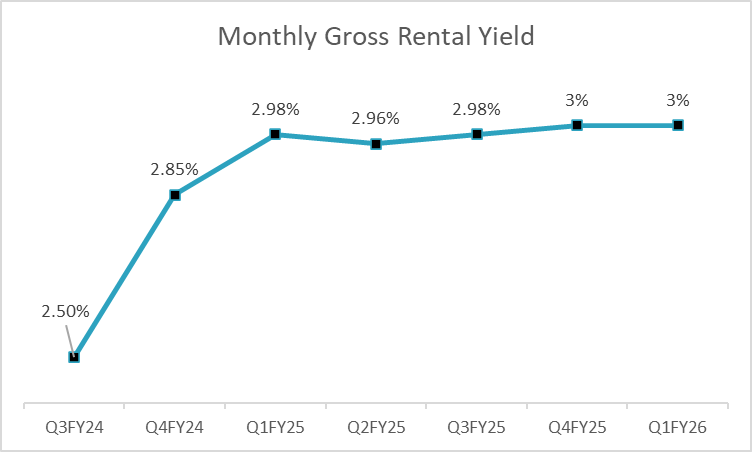
Parameters to look for?
Who are TCISL’s major competitors in India?
In the specialized crane rental industry, Sanghvi Movers Ltd. is widely recognized as the most significant player, both in India and globally, based on its capacity. Crown Lifters Ltd. is another publicly listed company operating in the crane rental segment. These companies represent direct competition for TCISL’s Equipment Handling (EH) vertical.
What are TCISL’s competitive advantages and unique selling propositions?
Integrated Solutions Provider: TCISL offers a comprehensive suite of services, including warehousing, multi-modal transportation, construction equipment rental, and turnkey infra-project execution. This integrated approach allows it to provide end-to-end solutions for complex infrastructure and industrial projects, differentiating it from single-service providers.
Extensive Experience and Established Track Record: With over 42 years of experience in the sector, and its promoters boasting four decades of industry expertise, TCISL benefits from deep market knowledge and a proven track record. This long operational history fosters trust and reliability among clients.
Modern and Diverse Fleet: The company maintains a young fleet of over 300 machines (average age within 5 years), which includes a wide array of heavy cranes (up to 800MT capacity), hydraulic piling rigs, steel processing equipment, concrete equipment, and notably, India’s first and tallest Aerial Working Platform. This modern and diverse fleet ensures high operational efficiency and the capability to undertake a variety of complex projects.
Strong Client Relationships: TCISL has cultivated long-standing relationships with a diverse portfolio of reputed customers, including major PSUs like SAIL and RINL, as well as large private players such as Ultratech, BHEL, L&T, and Reliance. These relationships often translate into repeat orders and long-term contracts, providing stable revenue visibility.
What are TCISL’s strategic growth plans and expansion projects?
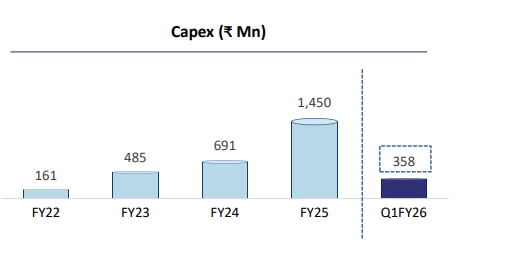
Aggressive Growth Targets and Capacity Addition: The company aims for an aggressive annual growth rate of 20-30% , To achieve this, TCISL plans substantial capital expenditure, allocating ₹100 crore over FY26. This investment is primarily directed towards expanding its equipment capacity, specifically acquiring 7-12 high-tonnage cranes. A prudent aspect of this strategy is that equipment additions are made only against confirmed orders, ensuring high utilization and direct revenue contribution. In Q1 FY26, the company deployed ₹35 crore as part of its planned ₹100 crore capex for the year, demonstrating active execution of its investment plans.
Strategic Shift in EPC Projects: TCISL is actively pursuing opportunities within the specialized Engineering, Procurement, and Construction (EPC) segment, focusing on civil and mechanical works. A key strategic refinement is the company’s conscious decision to move away from “run-of-the-mill EPC projects,” instead concentrating on specialized contractual services within its Equipment Rentals and Warehousing Logistics segments. This refined focus aims for higher-value engagements. The company is currently bidding for 3-4 year contracts in this specialized EPC space and target margins over 20%.
De-risking and Diversifying Transportation & Warehousing (TW) Segment: To enhance stability and improve working capital cycles, TCISL is actively working to de-risk its Transportation & Warehousing (TW) segment. This involves adding new private sector clients, including major steel manufacturers like TATA, JSW Steel, and ArcelorMittal Nippon Steel India. This diversification is intended to provide greater revenue visibility and improve cash flow efficiency.
What are the key risks faced by TCISL?
Cyclical Downturn in Public and Private Capital Expenditure: A significant risk for TCISL is its strong correlation with India’s overall capital expenditure cycle. The company’s growth is heavily reliant on sustained investments in infrastructure and industrial expansion. Therefore, any macro slowdown in public or private sector capital spending would directly and significantly impact TCISL’s order book and financial performance
Intense Competition: The logistics and equipment rental industries in India are characterized by fragmentation and intense competition. This competitive pressure can limit TCISL’s pricing flexibility and potentially squeeze profit margins if market conditions become unfavorable or if competitors engage in aggressive pricing strategies.
Capital Intensive Business: The growth of the business highly depends on the capex so company continuously needs to reinvest its profits to expand its fleet capacity.